

Private Aviation Isn’t About Luxury. It’s About Creating Time.
When most people think about private aviation, they picture luxury.
They think about the cabin, the service, and the exclusivity. And while those things absolutely exist, they are not the reason most business leaders continue flying privately year after year.
The real advantage is much simpler. Private aviation creates time.
Not by magically adding hours to the day, but by removing the friction that constantly steals their time. For executives managing companies, teams, projects, and clients across multiple cities or countries, that difference becomes significant very quickly.
Commercial airlines are incredibly effective at moving large numbers of people between major hubs. But business is not always compatible with hub schedules. Delays, layovers, cancellations, long drives from commercial airports, and rigid departure times all create inefficiencies that most executives eventually get tired of absorbing.
According to the U.S. Government Accountability Office (GAO), ongoing challenges such as widespread pilot shortages, air traffic controller constraints, and infrastructure bottlenecks continue to drive up commercial flight delays and cancellations.
A delayed commercial flight does not just mean arriving late. It can mean missing an important client meeting, losing a full business day, or spending another night away from home because the next available flight is tomorrow morning.
Creating time is thus one of the key benefits of private aviation.
Why Time Is the Real Luxury
The biggest misconception about private aviation is that people use it simply for comfort. The executives who rely on it most are usually focused on something else entirely: control over their schedule.
Instead of planning business around airline availability, they build travel around operational priorities. Meetings run long? The aircraft waits. Plans change mid-day? Routes can adjust in real time.
That flexibility creates something valuable that commercial travel often cannot: usable time. Business aviation also opens access to smaller regional airports that commercial airlines either do not serve or serve inefficiently. That matters for industries operating in secondary markets, manufacturing regions, infrastructure projects, and remote business locations.
The closer you can land to where business actually happens, the less time gets wasted getting there. That is one reason many companies increasingly view private aviation for executives as an operational tool rather than a luxury expense.
How Business Leaders Actually Use Private Aviation
Most people outside aviation underestimate how differently executives travel when private aircraft become available.
Instead of spending two days navigating commercial schedules for three meetings in different cities, leaders can complete multi-city travel in a single day and still return home that evening.
That changes how companies operate.
A CEO can inspect facilities in multiple states without losing an entire week to airports and hotel stays. An investment group can visit multiple portfolio companies in one trip. International clients can be reached directly instead of through layers of commercial connections.
The ability to move efficiently creates opportunities that are difficult to quantify until you experience them personally. It is not always about moving faster. It is also about removing unnecessary interruptions between decisions, improving quality of life and hence avoiding the significant financial and organizational costs associated with turnover at senior levels.
Companies that reduce travel fatigue for key leadership personnel are often better positioned to retain experienced executives and maintain operational continuity.
The Productivity Side Most People Never Consider
Perhaps the most notable among the business aviation benefits of flying privately is found in the cabin. Commercial flights are environments designed for mass transit, completely lacking in privacy or dedicated workspaces.
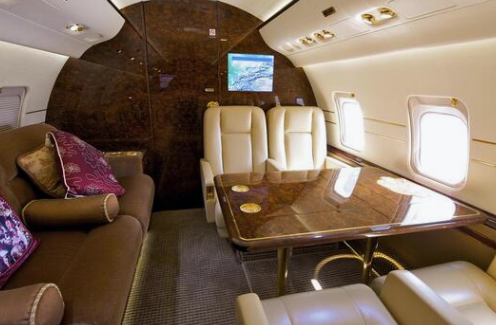
In contrast, a private aircraft can serve as an airborne boardroom. With reliable, high-speed in-flight connectivity, executive teams can review sensitive intellectual property, hold confidential strategy sessions, and conduct secure negotiations in a private working environment.
Furthermore, removing the stress of the airport terminal drastically reduces burnout and executive fatigue, allowing leaders to arrive at their destinations refreshed and ready to perform.
A team that arrives at a critical negotiation rested, fully briefed, and stress-free holds a distinct competitive advantage over an opposition team that spent the night dealing with commercial gate changes and lost luggage.
The Operational Flexibility That Changes Everything
One time-related strategic advantage of owning or chartering a private aircraft is operational flexibility. With commercial travel, the airline dictates the timetable. With private aviation, you dictate the schedule.
If a board meeting runs two hours long, the aircraft waits. If a business plan requires a sudden adjustment mid-trip, flight plans can be modified in real-time. This level of agility allows executives to capitalize on dynamic opportunities that competitors, bogged down by commercial schedules, are forced to miss.
When your transportation assets adjust to your schedule rather than forcing you to adjust to theirs, you change how your company reacts to market demands.
Why the Right Aircraft Strategy Matters
Your ideal time savings private jet will only work well when the strategy behind it is built correctly.
The right aircraft depends on variables such as mission requirements, passenger count, route structure, operational goals, and travel frequency. Some businesses benefit from ownership. Others operate more efficiently through charter solutions or managed aircraft programs.
Technology matters too. Connectivity, cabin configuration, operating range, and reliability all directly impact how useful an aircraft becomes operationally.
Behind every smooth operation is a significant amount of coordination involving pilots, maintenance, scheduling, compliance, and aircraft management.
That is why experienced aviation guidance matters.
The best aviation operations are the ones that feel effortless to the client because the complexity is being handled properly behind the scenes.
For companies serious about improving efficiency, reducing operational friction, and maximizing executive mobility, a private jet stops being about luxury very quickly.
It rather becomes more about evolving an effective operational strategy that helps save time and enhance both productivity and quality of life.